Catatonic schizophrenia is serious neurological or psychological
condition in which two kinds of behaviors are typically displayed:
stupor and motor rigidity or excitement. When people experience rigidity
or stupor, they are unable to speak, respond or even move. In other
cases, people will exhibit severe excitement or mania. Those
experiencing catatonic excitement will exhibit manic behaviors such as
babbling or speaking incoherently. Those suffering from catatonic stupor
remain in this motionless state for extended periods of time.
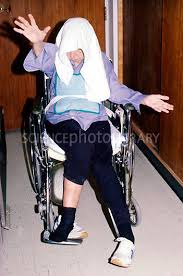
Catatonic Patient
Common Characteristics
The catatonic schizophrenic evidence strange positions and movements,
or long periods of motionlessness. She may stay in
uncomfortable-looking positions for long periods. She also resists
attempts to reposition them in more comfortable or natural positions.
In addition to a lack of mobility, the catatonic schizophrenic may
display excessive movement. In cases where people experience
excitability as a symptom, they may move in an erratic and extreme
manner. Pacing in a repeated pattern and making loud exclamations may
also occur. These actions serve no purpose and are not in response to an
environmental stimulus or event.
People with this disorder may also have other signs of schizophrenia
including hallucinations, delusions, cognitive problems, social
withdrawal, bursts of anger, poor personal hygiene, social issues, and
an inability to express emotions.

Diagnosis
Catatonic schizophrenia is typically diagnosed through a series of
medical exams and psychological evaluations. Patients receive a medical
exam to assess overall physical health. A blood test is usually given to
check for the presence of drugs and alcohol. MRIs and EEG may then be
used to check brain function and to look for any lesion or unusual brain
wave patterns.
During the psychological evaluation, a patient will be asked
questions about their thoughts and behaviors. A psychiatrist will
attempt to discover how long the patient has been experiencing the
symptoms in question. In some cases where the patient is in a catatonic
stupor, he or she may be unable to provide such information. In such
instances, the doctor will assess such symptoms and may interview family
members about the patient's past behavior.
Misdiagnosis
Because this type of schizophrenia is characterized by motor symptoms, it is sometimes mistaken for a psychotic mood disorder.
Likewise, the catatonic schizophrenic may sometimes display facial
contortions, strange limb movements, or unusual body positions, and are
therefor me they are sometimes misdiagnosed with a disorder known as
tardive dyskinesia.
Catatonic schizophrenia is also often marked by echolalia (repeating
what others say and echopraxia (copying another person's movements),
which might sometimes lead to a misdiagnosis of Tourette's syndrome.
Treatment
Catatonic schizophrenia is a lifelong, chronic condition. Even when
the patient does not exhibit symptoms of the disorder, they are still
schizophrenic and require ongoing treatment to prevent the return of
symptoms.
Medication
Medication is the most common form of treatment for schizophrenia.
Benzodiazepines
are perhaps the most common approach to treatment. These drugs act as
depressants on the central nervous system, which is why they are often
used to treat anxiety. Because these drugs are fast-acting, they can
often relieve catatonic symptoms quite quickly. However, they can be
habit-forming, especially if when used as a long-term treatment.
Other drugs such as barbiturates, antidepressants, and antipsychotics
are occasionally used to treat catatonic schizophrenia, but they are
not as effective as benzodiazepines.
ECT
Electroconvulsive therapy (ECT),
or shock treatment, has sometimes been used to treat catatonic
schizophrenia. This technique involves sending an electrical current
through the brain. Since ECT is so controversial and can produce severe
side effects such as memory loss, it is generally only used in severe
cases where patients have not responded to medications, are severely
depressed, and are at risk of suicide.
Psychotherapy
While medication is usually the first-line approach to treatment, it is often combined with psychotherapy.
Psychotherapists help patients better understand their feelings,
behaviors, and responses. People in therapy learn a variety of coping
skills and acquire new ways of dealing with stressful events in their
lives.
With appropriate treatment, an individual suffering from catatonic
schizophrenia can find relief from their symptoms. Treatment can also
help patients avoid many of the dangerous complications associated with
this disorder including substance abuse, family issues, and suicide.

Comments
Post a Comment